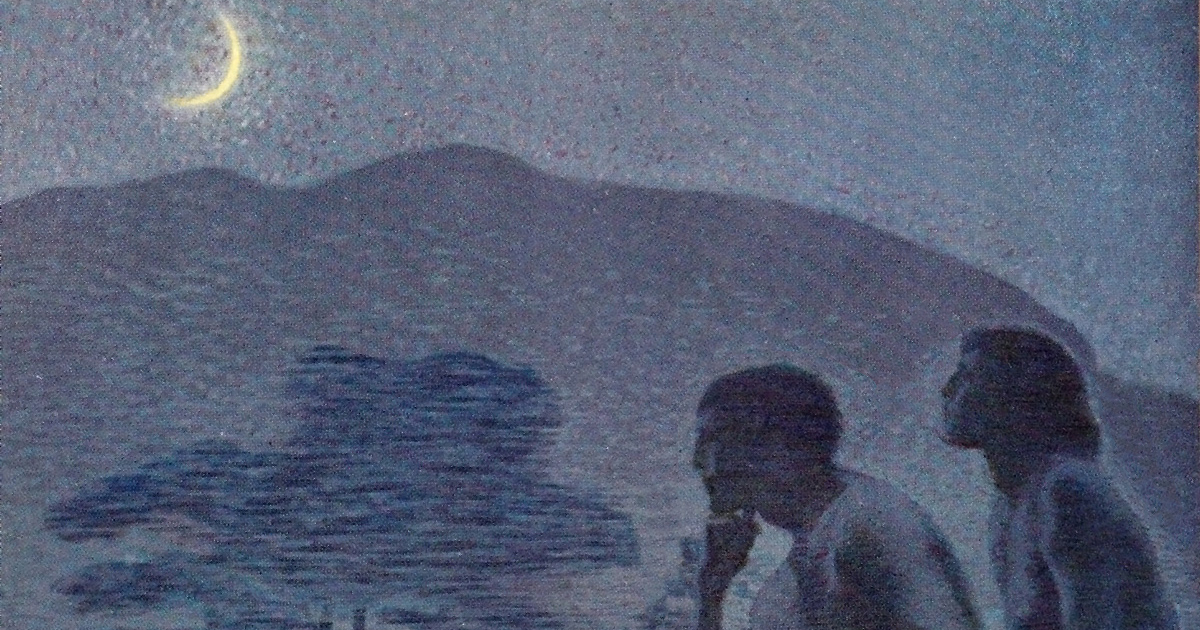
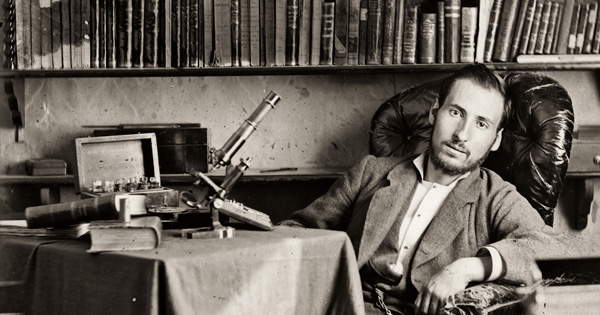
“Principles are good and worth the effort only when they develop into deeds,” Van Gogh wrote to his brother in a beautiful letter about talking vs. doing and the human pursuit of greatness. “The great doesn’t happen through impulse alone, and is a succession of little things that are brought together.” But what stands between the impulse for greatness and the doing of the “little things” out of which success is woven? That’s what neuroscience founding father Santiago Ramón y Cajal (May 1, 1852–October 17, 1934) addresses in his 1897 book Advice for a Young Investigator (public library) — the science counterpart to Rilke’s Letters to a Young Poet and Anna Deavere Smith’s Letters to a Young Artist, predating one by nearly a decade and the other by more than a century. Although Cajal’s counsel is aimed at young scientists, it is replete with wisdom that applies as much to science as it does to any other intellectually and creatively ambitious endeavor — nowhere more so than in one of the pieces in the volume, titled “Diseases of the Will,” presenting a taxonomy of the “ethical weaknesses and intellectual poverty” that keep even the most gifted young people from ascending to greatness. Self-portrait by Cajal at his library in his thirties, from Beautiful Brain: The Drawings of Santiago Ramón y Cajal It should be noted that Cajal addresses his advice to young men, on the presumption that scientists are male — proof that even the most visionary geniuses are still products of their time and place, and can’t fully escape the limitations and biases of their respective era, or as Virginia Woolf memorably put it in Orlando, “It is probable that the human spirit has its place in time assigned to it.” (Lest we forget, although the word “scientist” had been coined for a woman half a century earlier, women were not yet able to vote and were decades away from being admitted into European universities, so scientists in the strict academic sense were indeed exclusively male in Cajal’s culture.) Still, when stripped of its genderedness, his advice remains immensely psychologically insightful, offering a timeless corrective for the pitfalls that keep talent and drive from manifesting into greatness, not only in science but in any field. Considering the all too pervasive paradox of creative people “who are wonderfully talented and full of energy and initiative [but] who never produce any original work and almost never write anything,” Cajal divides them into six classes according to the “diseases of the will” afflicting them — contemplators, bibliophiles and polyglots, megalomaniacs, instrument addicts, misfits, and theorists. He examines the superficiality driving the “particularly morbid variety” of the first type: [Contemplators] love the study of nature but only for its aesthetic qualities — the sublime spectacles, the beautiful forms, the splendid colors, and the graceful structures. One of Cajal’s revolutionary histological drawings With an eye to his own chosen field of histology, which he revolutionized by using beauty to illuminate the workings of the brain, Cajal notes that a contemplator will master the finest artistic techniques “without ever feeling the slightest temptation to apply them to a new problem, or to the solution of a hotly contested issue.” He adds: [Contemplators] are as likable for their juvenile enthusiasm and piquant and winning speech as they are ineffective in making any real scientific progress. More than a century before Tom Wolfe’s admonition against the rise of the pseudo-intellectual, Cajal treats with special disdain the bibliophiles and polyglots — those who use erudition not as a tool of furthering humanity’s enlightenment but as a personal intellectual ornament of pretension and vanity. He diagnoses this particular “disease of the will”: The symptoms of this disease include encyclopedic tendencies; the mastery of numerous languages, some totally useless; exclusive subscription to highly specialized journals;
The Marginalian · 双语精读
Diseases of the Will: Neuroscience Founding Father Santiago Ramón y Cajal on the Six Psychological Flaws That Keep the Gifted from Living Up to Their Gift
2026.07.15 · science